

ORATAP guides
Loyalty Programs for Direct Orders: Setup Guide
Create clear loyalty rules for direct orders: earning, rewards, exclusions, consent and staff checks. A practical setup guide for food businesses.
By ORATAP · Written for independent US food businesses
Start with one understandable reward
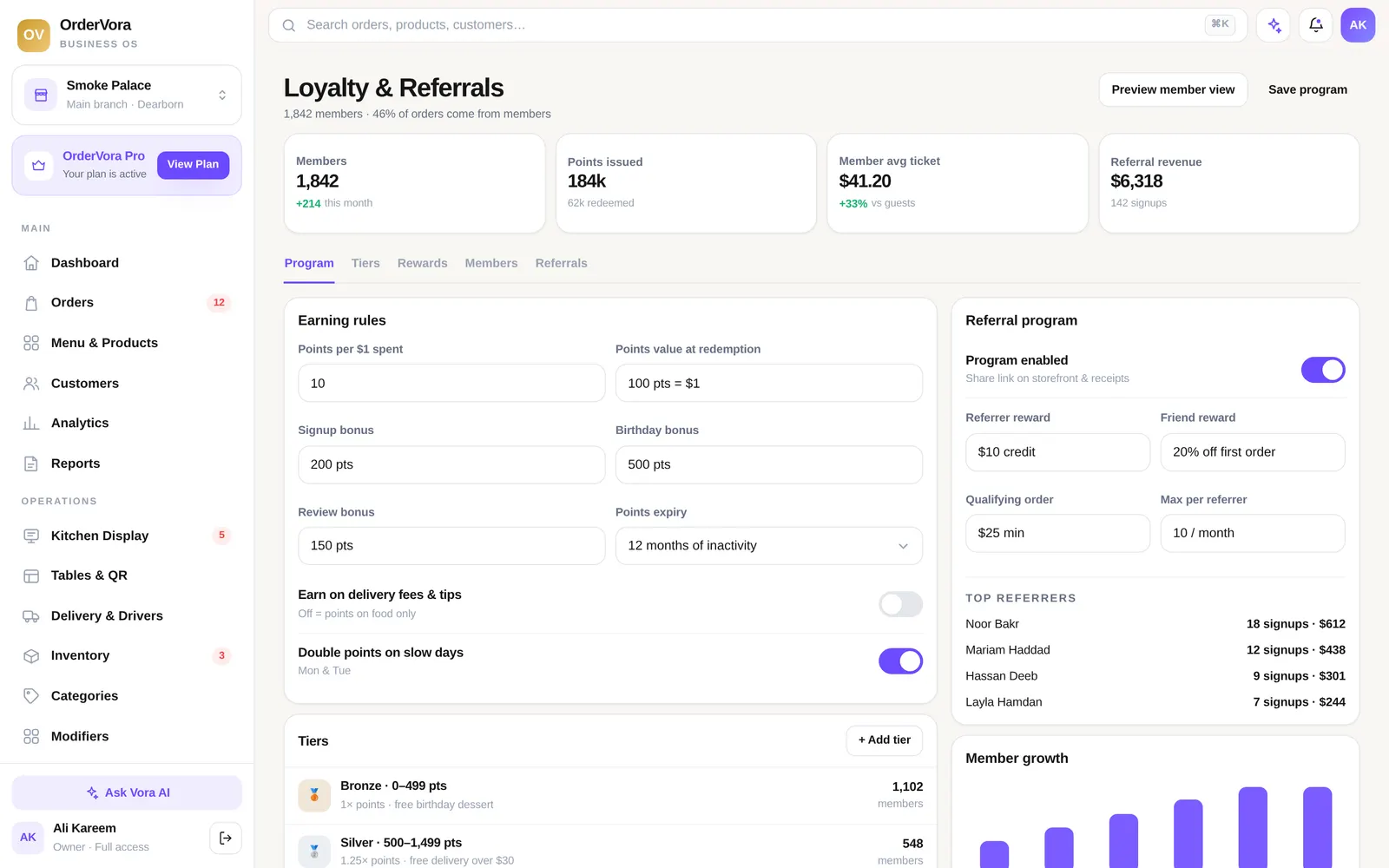
A loyalty program should be easy to explain at the counter and easy to recognize at checkout. Choose a reward customers value and a cost your business can sustain. A simple rule is easier to test than a collection of overlapping discounts with different exclusions.
Write down what earns credit, what can be redeemed and which purchases are excluded. Decide how refunds affect a balance and whether promotions can be combined. Do not publish an expiration promise until your actual settings and terms support it.
Check the economics before choosing the reward
The advertised value of a reward is different from its cost to the business. Use your own product margin and redemption assumptions. A program may change basket size or timing without creating additional profit. Keep those possibilities visible in your planning worksheet.
Avoid using an invented redemption rate or industry average as evidence. If the business is new, label your scenario as an assumption. After launch, use actual completed redemptions and refunds to replace the assumptions.
Make earning and redemption visible
Customers need to understand when a reward becomes available and how to use it. Test a signed-in customer journey and verify that the displayed balance comes from the real program. A decorative points mockup is not evidence that a reward was earned.
ORATAP includes loyalty in both plans. Configure and test your own rules before announcing them. Staff should know how to handle a customer who cannot sign in, a refunded order and a reward that does not apply to a particular basket.
Separate membership from marketing permission
Having a customer account or loyalty balance does not automatically authorize every type of marketing message. Use the permissions and unsubscribe mechanisms that apply to your channel and location. Keep transactional order notices distinct from promotional campaigns.
Do not export customer emails or phone numbers into an unapproved tracking tool. Aggregate program performance is useful without putting personal details in analytics events. Explain the program using your actual privacy policy and customer-facing terms.
A small launch is easier to learn from
Ask staff to test earning, redemption and a refund using an authorized test process. Review the receipt and account display. Then launch with rules you can explain consistently. Measure repeat orders and reward cost over a meaningful period before claiming a business result.
- One clear reward and published eligibility rules.
- Correct earning and redemption in the customer journey.
- Refund and exception handling understood by staff.
- Customer permissions and opt-out routes reviewed.
- A review date based on real activity, not a promised uplift.
Questions owners ask
What should the first reward explain?
State how customers earn it, how they redeem it, exclusions, refund treatment and any real expiry rules. Use terms your staff can apply consistently.
Does joining loyalty permit every marketing message?
Follow the customer's actual permissions and the rules for the channel. Keep transactional notices separate from promotions and use the approved privacy process.
What should I measure after launch?
Use actual redemptions, reward cost, refunds and repeat completed orders over a meaningful period. Do not substitute an invented redemption rate or promised sales uplift.
Sources and next steps
- ORATAP loyalty and growth — checked 2026-11-17
- ORATAP privacy policy — checked 2026-11-17
Published terms can change. Check the source and your agreement before making a purchase.